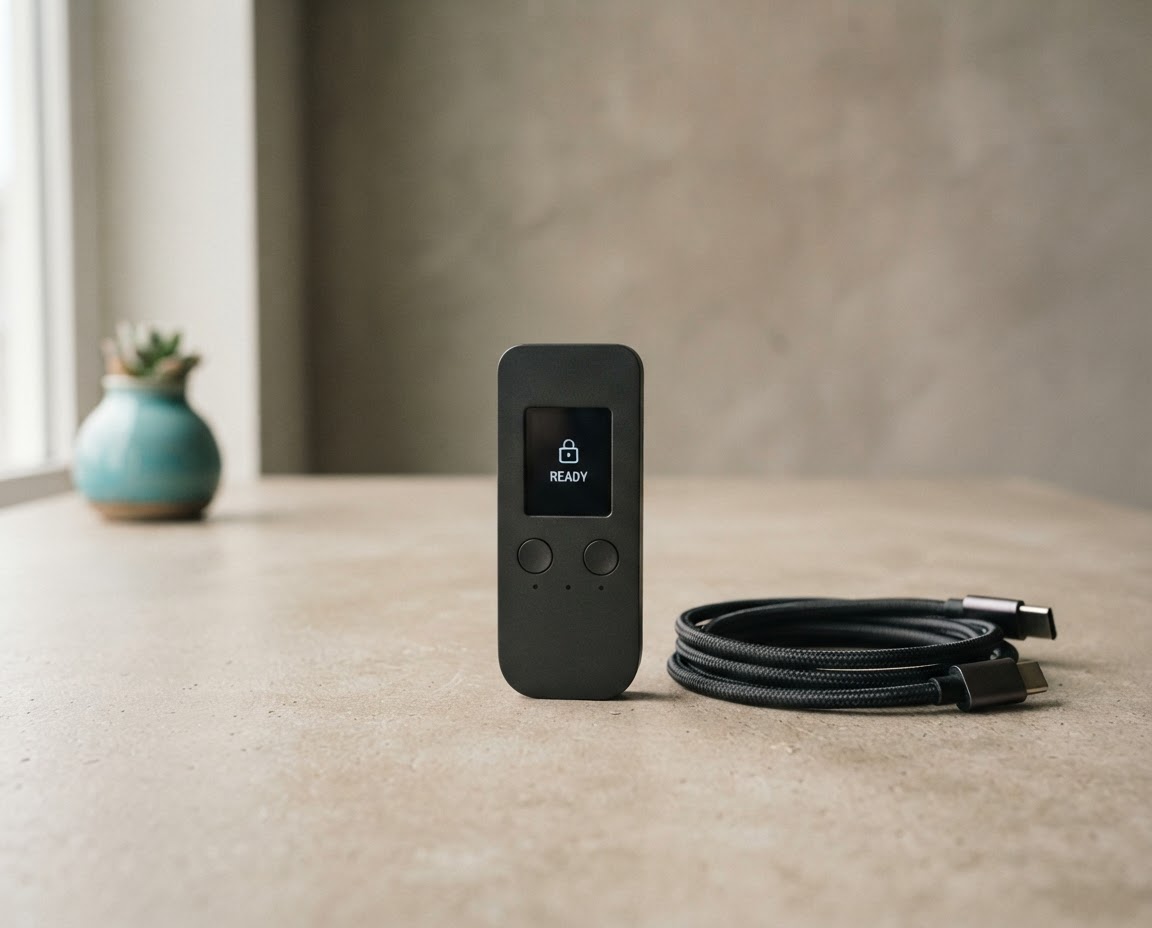
Use this guide as a preparation companion while following the instructions presented on your device and in the wallet software you intentionally chose. The safest pace is a measured one: pause whenever a screen, request, or instruction feels unexpected.
1. What to Know Before Starting
A hardware wallet is designed to keep important signing actions tied to a physical device. It does not remove the need to make careful decisions: your recovery information can restore access, so protecting it matters as much as protecting the device itself. Setup is a series of deliberate choices, not a race to get through screens.
Give yourself an uninterrupted window and read each instruction fully. This page is general educational information, not official Trezor support or personalized financial advice. Device models, software interfaces, and instructions can change; rely on current materials from the source you independently verified.
2. Device and Environment Preparation
Begin with a clean, private workspace. Put the device, its cable, and any included written materials within reach. Choose a computer or phone you control, with a stable connection and a screen you can inspect comfortably. Close unrelated browser tabs and avoid public or shared computers where other people may have access.
Check that the device and cable appear intact. If anything looks altered, damaged, or inconsistent with what you expected, pause and seek guidance through a support route you locate independently. Do not use links from unsolicited messages. Make sure you have enough time to complete the process without rushing; interruptions can lead to missed details.
Set up a private space
Reduce the chance that someone can see or photograph your screen or written recovery information. Keep cameras, screen-sharing tools, and recording software away from the setup. Privacy is a practical part of preparation, not an extra step.
3. Understanding the Setup Journey
Think of the process in five stages. Prepare your environment and materials. Check the device and follow the instructions it presents. Connect only through the wallet tools you meant to open. Protect the recovery information generated or requested by the device. Finally, review what you chose and how you will keep the device and recovery record secure.
Exact screens and order can vary by device and software version. Read on-device prompts rather than relying on a remembered walkthrough or someone else’s screenshots. If a direction conflicts with what you see, stop and verify through trusted documentation before proceeding.
4. Checking Device Information
Pay attention to information displayed directly on the physical device, especially when the computer asks you to confirm an action. A device prompt is an opportunity to verify what you are approving, not a notification to dismiss quickly. Check that the request matches the action you intended and that any displayed details make sense in context.
Do not assume that a familiar logo, polished page, or plausible message proves a request is genuine. If the device shows an unexpected warning, asks for something that feels out of place, or presents details you cannot confirm, pause. Consult current guidance from a source you navigate to yourself instead of following a pop-up or direct message.
5. Keeping Recovery Information Private
Recovery information is highly sensitive. Anyone who obtains it may be able to access the wallet it restores. Write it down only as directed by your device, check that you have recorded it accurately, and store the record somewhere private and protected from loss, damage, and casual discovery. Consider the risks of fire, water, theft, and anyone else who can access your space.
Never type recovery words into a computer, phone, browser, chat, email, cloud note, or online form. Never photograph or upload them. A legitimate support interaction should not ask you to disclose them. If a page or person requests the words to “verify,” “sync,” or “fix” your wallet, stop: treat the request as unsafe.
6. Safe Browsing and Scam Awareness
Type a trusted address yourself or use a bookmark you created after verifying it. Check the full domain before interacting; lookalike spellings, sponsored results, fake support accounts, and urgent warnings are common ways to steer people to unsafe pages. A lock icon in the browser does not prove that a site is the right site.
Be cautious of unsolicited calls, direct messages, QR codes, or download prompts. Do not let strangers remotely control your computer or ask you to install tools under pressure. When in doubt, close the page, open a fresh browser window, and independently find the current official documentation for your device. This guide does not provide or promote downloads.
7. Common Beginner Mistakes
Rushing through prompts is one avoidable mistake; another is assuming setup instructions are identical across every model or software release. Read what is on your screen and device now. Avoid copying recovery information into a digital file “just temporarily”—temporary copies can sync, back up, or be exposed without your noticing.
Do not follow a search ad, unsolicited support link, or instructions from someone who asks to see your recovery record. Avoid starting setup while distracted, on a shared machine, or where others can watch. If you are uncertain, pause before confirming an action. Taking time to verify is safer than trying to undo a rushed decision.
8. Frequently Asked Questions
Is this an official Trezor setup page?
No. This is an independent educational checklist and does not claim affiliation with Trezor. Use official product documentation that you locate independently for current device-specific instructions.
Should I enter my recovery words on my computer?
No. Do not enter or share recovery information on a computer, website, chat, or with a support agent. Follow only the instructions shown directly by your device for the specific process you are carrying out.
What if the on-device instructions differ from this guide?
Device prompts and software can change. Pause and consult current documentation from a verified source. Do not proceed based only on an old guide, a stranger’s advice, or an unexpected message.
Can I finish setup later?
If you are distracted or unsure, it is sensible to pause at a safe point and review trusted instructions before continuing. Keep the device and any sensitive written information private while you decide what to do next.
9. Final Readiness Checklist
Mark each reminder as you review it. Your selections stay only in this page while it is open.
A thoughtful start is a secure start.
Preparation does not need to be complicated. Keep your workspace private, verify what your device shows, protect recovery information offline, and pause whenever something feels wrong. Return to trusted, current device guidance whenever you need to confirm a step.